
Solar mounting systems fall into four working families: roof mounts, ground mounts, pole mounts, and trackers. Each one solves a different structural problem, and picking the wrong one is the fastest way to blow a project budget or fail an inspection. Gq-international builds engineered steel and aluminum racking across three product lines, the GQ-A Series Fixed-Adjustable Mounting System, the GQ-F Series Fixed Mounting System, and the GQ-FL series flexible support, that map onto those families. What follows covers how to choose between them and where installations tend to go wrong.
TL;DR:
- Proper matching of rack load ratings to local wind and snow conditions is essential before selecting a mounting system to avoid costly redesigns and delays.
- Ground mounts offer more tilting options and larger array sizes, but require site-specific foundation engineering, especially on poor soil or cold climates.
- Fixing leaks depends more on high-quality flashing and sealing around penetrations than on the type of mounting hardware used.
- Mounting hardware cost usually accounts for around 10% of the total system, but custom engineering and trackers can significantly increase this share.
- Projects with unusual site conditions benefit from in-house engineered solutions and site-specific static calculations directly from the manufacturer.
Table of Contents
- What Are the Main Types of Solar Mounting Systems?
- Core Components: Attachments, Rails, Clamps, and Foundations
- How Do You Choose the Right Solar Racking System?
- What Installation Mistakes Cause Solar Mounting Failures?
- What Do Solar Mounting Systems Cost, and How Long Do They Take?
- Matching GQ Mounting Systems to Your Project
- Where Solar Mounting Technology Is Headed
- Get Engineering Support for Your Mounting Project
- Where to Verify Standards and Yield Estimates
- Sources
- FAQ
What Are the Main Types of Solar Mounting Systems?
Roof mounts remain the default for residential and commercial rooftop installs, but “roof mount” covers a lot of ground. Standing seam roofs use non-penetrating clamps that grip the seam itself. Tile roofs need replacement mounts or hooks that route load around fragile ceramic. Newer railless and tension-based systems cut part counts and shave installed weight, which matters on older structures with limited load margin, as Wikipedia’s overview of photovoltaic mounting systems documents.
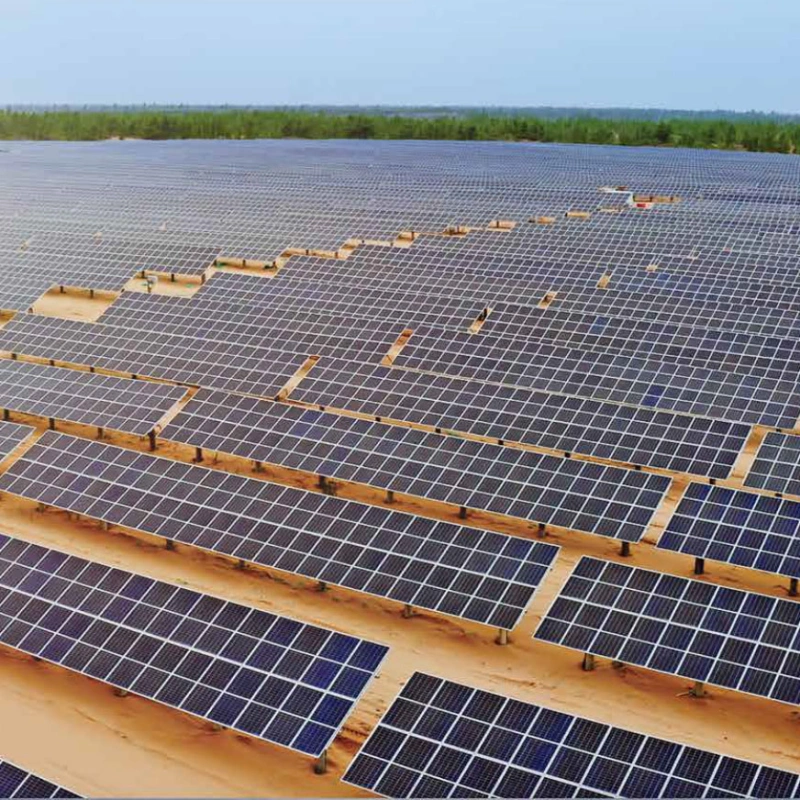
Ground-mounted solar systems open up options that roofs don’t allow: fixed-tilt racks bolted to driven piles, ballasted systems that sit on concrete blocks without any ground penetration, and embedded-foundation designs for sites with poor soil bearing. Pole mounts serve smaller arrays, off-grid setups, and locations where a single elevated structure beats a sprawling ground array.
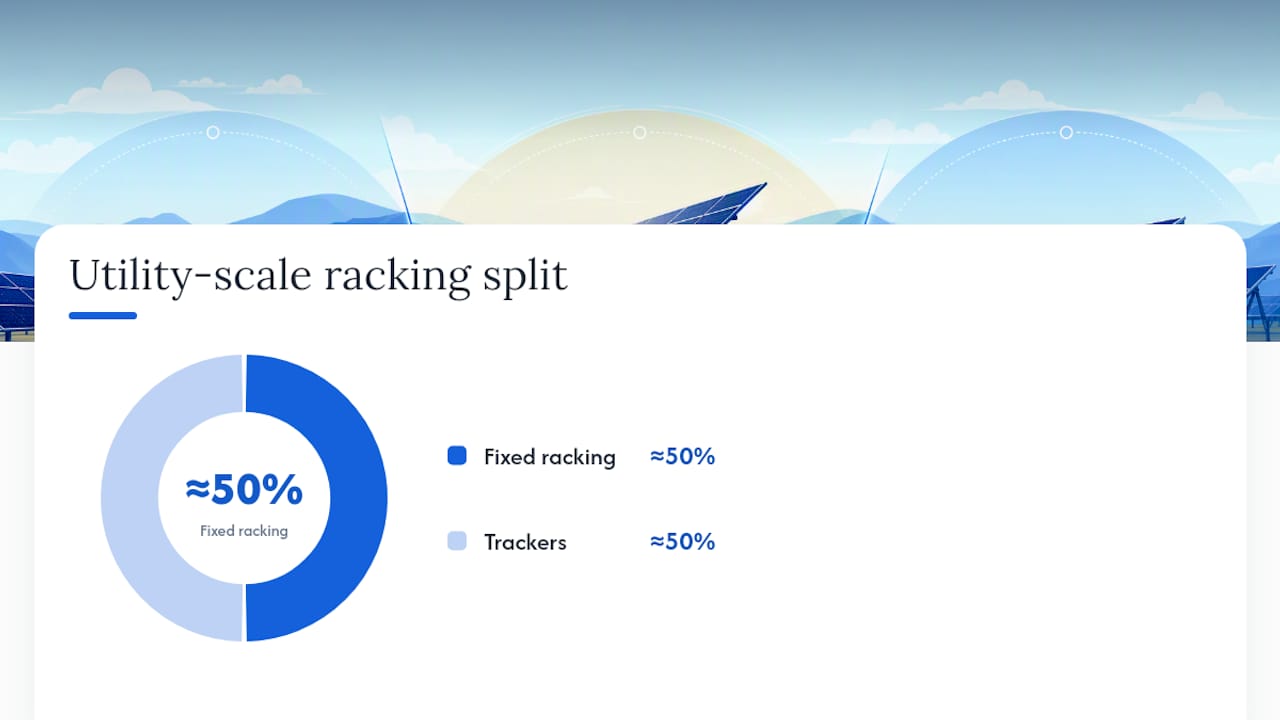
Trackers add a moving axis to chase the sun. Single-axis trackers rotate east to west and suit flat, open land at utility scale. Two-axis trackers add tilt tracking for maximum yield, at higher mechanical complexity and cost. SolarPower Europe estimates utility-scale installations in Europe split roughly 50-50 between fixed racking and trackers, a sign that the “just use fixed tilt” default no longer holds at scale.
- Roof mounts: standing seam, tile-replacement, railless, and tension-based systems
- Ground mounts: driven-pile fixed-tilt, ballasted, and embedded-foundation designs
- Pole mounts: single-pole structures for smaller or off-grid arrays
- Trackers: single-axis for open utility sites, two-axis where yield justifies the added mechanics
Core Components: Attachments, Rails, Clamps, and Foundations
Every mounting system, regardless of family, breaks down into a handful of parts that all have to work together. Roof attachments and flashings transfer load into the structure and, done poorly, are the number one cause of leaks. Rails span between attachments and carry the module load. Clamps, either end clamps or mid clamps, secure the module to the rail without penetrating the glass laminate. On ground and pole systems, the foundation, whether driven pile, screw pile, or poured concrete, replaces the roof attachment as the load path into the earth.
Material choice comes down to aluminum versus steel. Aluminum resists corrosion naturally and installs light, which matters for railless roof retrofits. Steel, typically hot-dip galvanized, carries higher loads at lower cost per pound and dominates ground-mount and utility racking where weight isn’t the constraint. Fastener grade and coating spec matter as much as the base metal. A mismatched fastener can corrode a rack from the inside years before the panels degrade.
Statistic Callout: Racking and mounting hardware typically run about 10% of total system cost, and that share climbs fast once custom engineering, ballast, or tracker mechanics enter the picture.
- Roof attachments and flashings: transfer load, seal penetrations
- Rails: span between attachments, carry module weight
- Clamps: secure modules without stressing the glass
- Foundations: piles, screw anchors, or poured concrete for ground systems
How Do You Choose the Right Solar Racking System?
Start with structural capacity, not price. A rack rated for 30 pounds per square foot of snow load is a different product than one rated for 50, and swapping them after permitting starts a costly redesign. Local wind and snow loads, roof type, and your orientation goals (fixed tilt versus tracking) should drive the shortlist before you ever look at a spec sheet’s price column.
- Confirm structural capacity first. Match the rack’s load rating to your site’s actual wind and snow zone data, not a regional average.
- Identify roof type or ground condition. Standing seam, tile, and membrane roofs each demand different attachment hardware; ground sites need a geotechnical read before foundation type is picked.
- Set orientation goals. Decide whether fixed tilt meets your yield target or whether a tracker’s added cost pencils out over the project’s life.
- Request documentation. Ask suppliers for load tables, static calculations, warranty scope, and manufacturing lead times in writing before committing.
- Vet the supplier and installer. Ask about custom engineering capacity, experience with local approval processes, and prior work on roofs or terrain like yours.
A quality installer picks racking based on roof type and local loads, not the lowest quote, and EnergySage’s racking guide makes the same point: mismatched racking creates compatibility problems that show up as change orders later.
Pro Tip: Ask every bidder for their static calculation report on your exact roof or soil type before signing, not a generic engineering letter. A generic letter tells you nothing about your site’s wind exposure or your soil’s bearing capacity.
What Installation Mistakes Cause Solar Mounting Failures?
Roof penetrations are where most long-term problems start. Practitioner sources consistently point to poor flashing and sealing as the leading cause of post-installation leaks, not panel defects or wiring faults. Every penetration needs a flashed, tested attachment, and every seal needs verification before the crew moves to the next rail.
Beyond flashing, a few checks separate a reliable install from a callback-prone one:
- Torque every fastener to the manufacturer’s spec and re-check after the first thermal cycle.
- Route and secure wiring so it can’t chafe against rails or roofing material.
- Weigh ballast against penetration mounts carefully. Ballast avoids roof holes but adds dead load; penetrations reduce weight but add leak risk if sealed poorly.
- On ground mounts, check frost-heave risk in cold climates. Shallow foundations can shift a rack out of alignment over a few freeze-thaw cycles.
Pro Tip: Build a year-one inspection into the contract, not just an annual one after that. Fastener seating and sealant cure often reveal problems in the first twelve months that never show up again after.
What Do Solar Mounting Systems Cost, and How Long Do They Take?
Budget racking at roughly 10 percent of total system cost as a baseline, then adjust upward for anything nonstandard. Custom engineering, ballasted foundations, and tracker mechanics all push that share higher, sometimes substantially, because they add material, labor, and design review that catalog fixed-tilt racking doesn’t need.
Lead times vary just as much. Catalog fixed-mount systems often ship in weeks. Custom-engineered racking, site-specific tracker installations, or anything requiring a stamped structural review can take considerably longer, and that timeline should be locked in before a project schedule gets published to a client.
- Catalog fixed-tilt racking: shortest lead times, lowest engineering overhead
- Custom or site-engineered racking: longer lead times, higher cost share
- Trackers: highest mechanical complexity, longest commissioning window
Warranty terms track material choice. Aluminum and galvanized steel systems commonly carry warranties in the 10 to 25 year range depending on manufacturer and coating spec, and service life should match or exceed the panel warranty it’s protecting.
Matching GQ Mounting Systems to Your Project
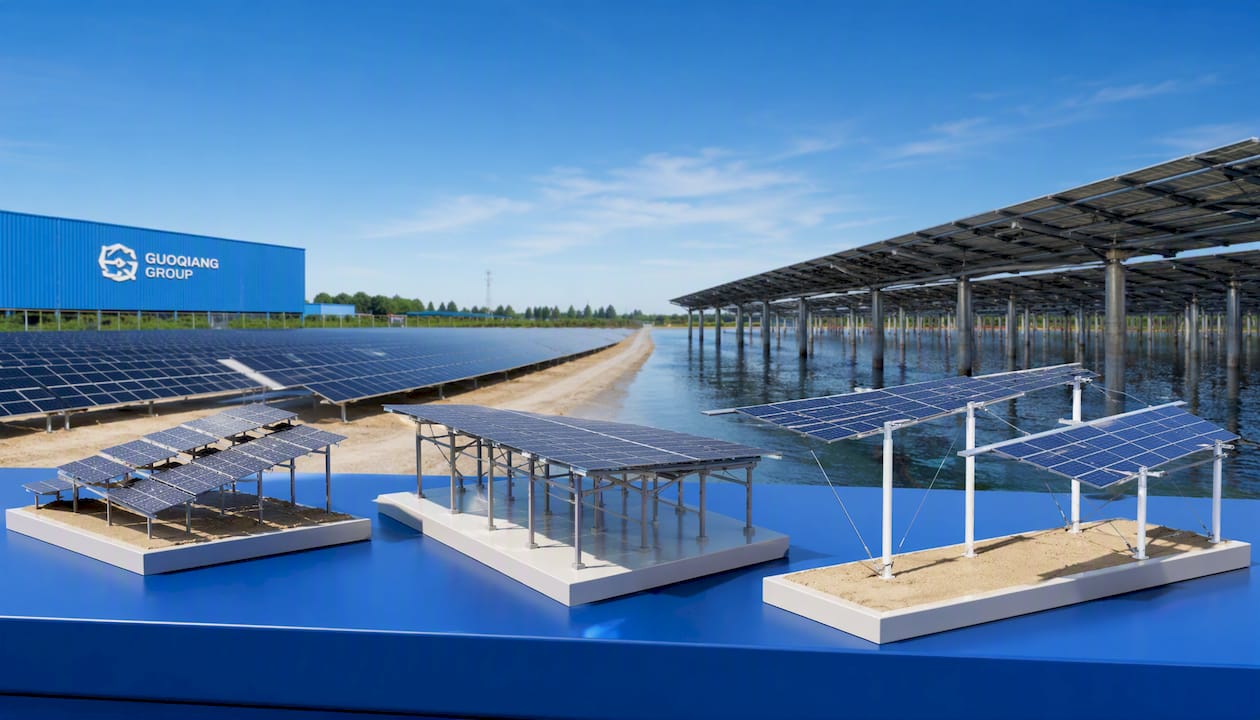
Fixed-adjustable projects that need tilt flexibility across a mixed portfolio of roof and ground sites fit the GQ-A Series. Heavy-duty commercial and utility-scale fixed installations, where structural capacity matters more than tilt adjustment, fit the GQ-F Series. Unusual substrates, retrofits, and canopy-style applications fit the GQ-FL flexible support line.
…
Where Solar Mounting Technology Is Headed
Trackers and smart substructures are capturing more project value as developers chase yield beyond simple fixed tilt, a shift SolarPower Europe is already tracking at utility scale. Buyers should also watch harmonized quality standards and domestic-content rules, since both are starting to shape which racking qualifies for incentive programs.
— Hu
Get Engineering Support for Your Mounting Project
Some manufacturers provide a direct manufacturing route for procurement teams who need engineered racking without negotiating through a reseller layer. Instead of piecing together specs from multiple catalogs, you work from three mapped product lines, fixed-adjustable, heavy-duty fixed, and flexible support, backed by in-house production and quality control on every run.
Each PV mounting system product category page carries specs and static reports you can hand directly to your structural engineer or permitting office. If your site has unusual terrain or layout constraints, a surveying partner like INSS can help nail down site geometry before you finalize rack selection. For teams that need engineering beyond a catalog fit, Gq-international’s OEM and ODM mounting solutions cover project-specific design work. Request site-specific static calculations, lead time, and warranty terms directly through the full product catalog or the company contact page to get a quote moving.
Where to Verify Standards and Yield Estimates
Cross-check racking decisions against independent sources before finalizing a design. SolarPower Europe’s mounting systems report covers market and standards context, PVWatts estimates yield for tilt and azimuth decisions, and DSIRE tracks regional incentives and regulatory rules that affect permitting.
Sources
- Solar Mounting Systems Explained – Supporting Europe’s flexible solar future
- Solar racking: How to choose the best option
- Your Guide To Solar Panel Mounts
- PVWatts
FAQ
What Is the Difference Between Roof Mounts and Ground Mounts?
Roof mounts attach directly to an existing structure using flashed penetrations or standing-seam clamps, while ground mounts use piles, ballast, or poured foundations independent of any building. Ground mounts generally allow larger arrays and easier tilt optimization, but they need more land and a foundation design suited to local soil conditions.
How Much Do Solar Mounting Systems Cost?
Racking commonly runs around 10% of total system cost, though custom engineering, ballasted foundations, or tracker mechanics push that percentage higher. Gq-international does not publish list prices for its GQ-A, GQ-F, or GQ-FL product lines; project-specific quotes are available on request through the product catalog.
Do I Need a Tracker or Is Fixed-Tilt Racking Enough?
Fixed-tilt racking covers most residential and commercial rooftop projects and much of ground-mount work where land and budget are tight. Trackers make sense at utility scale where added yield justifies the mechanical cost, and SolarPower Europe reports roughly half of European utility-scale capacity now uses tracking systems.
What Causes Leaks in Roof-Mounted Solar Systems?
Poor flashing and sealing around roof penetrations is the leading cause of post-installation leaks, not the mounting hardware itself. Verified flashing details and torque checks during installation prevent most of these failures.