

This guide explains the basic principles of fall protection guardrails, common system types, applications, design considerations, and factors to evaluate when selecting a fall protection railing system.
What Are Guardrails for Fall Protection?
Guardrails for fall protection are barrier systems installed along an unprotected or exposed edge to help prevent workers from falling to a lower level. A typical system may include top rails, midrails or intermediate members, posts, mounting components, and, where required, toe boards or other protective elements.
Unlike a personal fall arrest system, which is designed to stop a worker after a fall occurs, a guardrail is a passive fall protection solution. It provides a physical barrier that can help prevent a worker from reaching or passing over an exposed edge.
OSHA defines a guardrail system as a barrier erected along an unprotected or exposed side, edge, or other area of a walking-working surface to prevent employees from falling to a lower level. Applicable requirements depend on the type of workplace and activity.
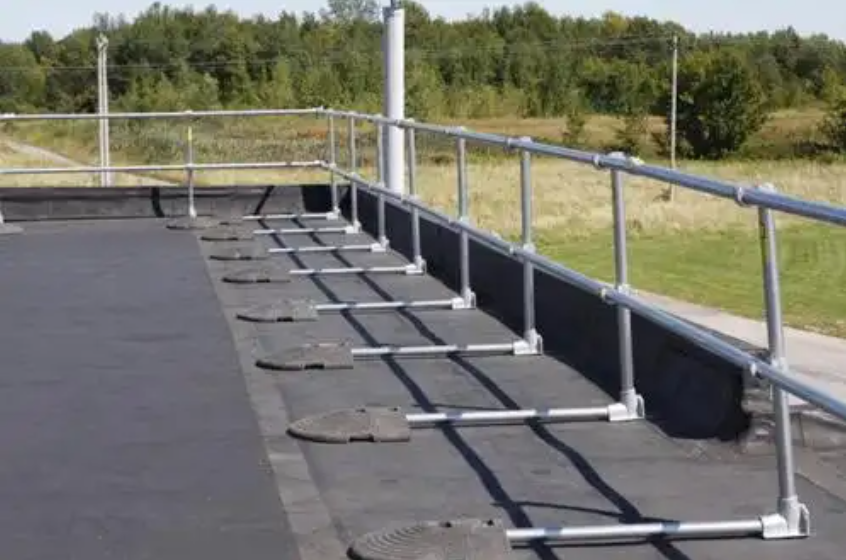
Why Are Fall Protection Guardrails Important?
Elevated work areas can contain a variety of fall hazards, including open edges, roof perimeters, platforms, mezzanines, walkways, ramps, loading areas, and access openings. A suitable fall protection guardrail system can create a clearly defined protected area and reduce the possibility of accidental falls.
01. Creates a Physical Barrier
The primary purpose of a fall protection railing is to provide a physical barrier along an exposed edge. This can help keep workers away from dangerous areas during normal movement and work activities.
02. Provides Passive Fall Protection
Guardrails are generally considered a passive form of fall protection because workers do not need to connect a harness or activate the system for the barrier to perform its protective function.
03. Supports Safer Work Areas
A well-designed rail system can help define safe working boundaries around platforms, roofs, equipment areas, walkways, and other elevated surfaces.
04. Can Protect Against Falling Objects
Depending on the design and application, additional components such as toe boards, screens, mesh, or intermediate members may be used to help address hazards involving objects falling to lower levels.
How Does a Fall Protection Guardrail System Work?
A typical fall protection guardrail system consists of several structural components working together. The exact configuration depends on the application and applicable requirements.
Top Rail
The top rail forms the primary horizontal barrier along the edge. It is supported by posts and is designed to provide structural resistance against expected loads.
Midrail or Intermediate Protection
A midrail or other intermediate member helps reduce the open space between the top rail and the walking-working surface. Screens, mesh, vertical members, or other equivalent components may be used depending on the system design.
Posts
Posts transfer loads from the rails into the supporting structure. Post spacing, connection design, material selection, and mounting method should be determined according to the application and engineering requirements.
Base and Mounting Components
Guardrail systems may be mounted to concrete, steel structures, roof surfaces, platforms, decks, parapets, or other supporting structures. The mounting method should be selected according to the substrate and expected loads.
Toe Boards and Additional Protection
Where there is a risk of tools, materials, or other objects falling to a lower level, toe boards, screens, mesh, or other protective measures may be required depending on the application and applicable regulations.
Common Types of Fall Protection Guardrails
Different working environments require different types of fall protection rail systems. The appropriate configuration depends on the location, substrate, access requirements, structural conditions, and intended use.
Roof Fall Protection Guardrails
Roof fall protection guardrails are designed to protect workers near roof edges, roof openings, maintenance areas, and other elevated roof locations.
A roof edge fall protection system can provide a continuous barrier along exposed roof edges while allowing workers to perform inspection, maintenance, installation, and service activities.
Roof Fall Protection Railing
Roof fall protection railing may be used around the perimeter of flat or low-slope roofs and around specific roof work areas. Depending on the roof structure, systems may use different mounting and connection methods.
Permanent Fall Protection Railing Systems
Permanent fall protection railing systems are designed for locations where elevated access or maintenance is a long-term requirement. These systems can be integrated into the structure during construction or installed as part of an existing facility upgrade.
Temporary Guardrail Systems
Temporary guardrails can be used where fall protection is required during construction, maintenance, repair, or other temporary activities. The installation method should be appropriate for the structure and the duration of the work.
Industrial Fall Protection Guardrails
Industrial facilities may require guardrails around elevated platforms, machinery areas, walkways, mezzanines, loading areas, and maintenance platforms.
An industrial fall protection guardrail system should consider both worker movement and the surrounding equipment, access routes, and operating conditions.
Fall Protection Guardrails for Roof Edges
Roof edges are one of the most common applications for fall protection railing systems. Workers may need to access roofs for inspection, maintenance, solar installation, HVAC service, construction, or other activities.
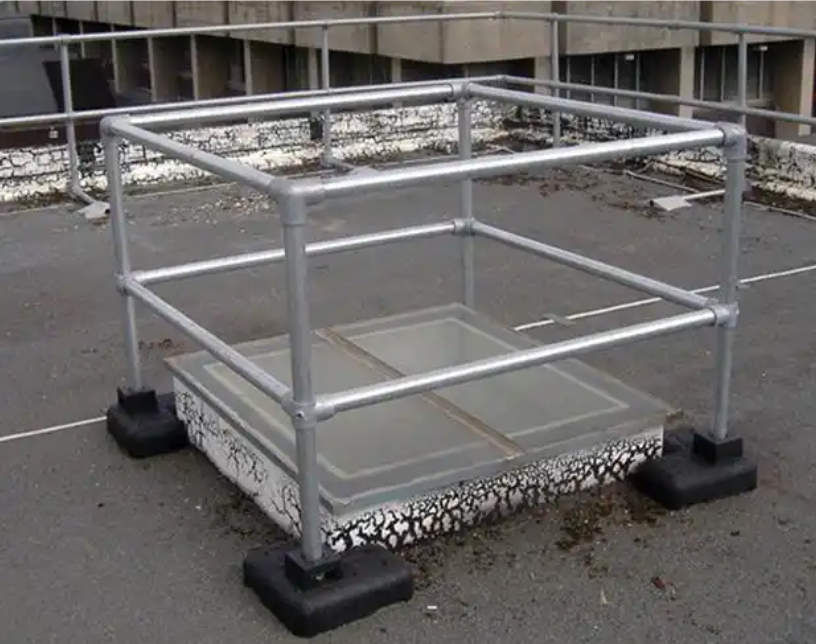
A roof edge fall protection railing system can establish a protected perimeter around exposed edges while allowing authorized personnel to work within the protected area.
Roof guardrail design should take into account roof type, parapet height, structural capacity, mounting location, wind exposure, access points, and the activities performed on the roof.
Common Roof Applications
- Commercial building roofs
- Industrial facility roofs
- Warehouse roofs
- Flat and low-slope roofs
- Rooftop equipment areas
- Solar installation and maintenance areas
- HVAC maintenance zones
- Roof access areas
Fall Protection Railing Requirements
Fall protection railing requirements vary according to the workplace, industry, work activity, and applicable jurisdiction. In the United States, OSHA requirements differ between general industry and construction applications, so the correct standard should be identified before selecting or installing a system.
For example, OSHA’s general industry requirements in 29 CFR 1910.29 specify criteria for guardrail systems, including requirements related to structural strength, top-rail height, intermediate members, surface conditions, and openings. Construction applications can be subject to different requirements under 29 CFR Part 1926.
For this reason, a guardrail should not be selected based only on appearance or nominal dimensions. The complete system, supporting structure, installation method, and intended application should be evaluated against the requirements that apply to the project.
Important: Regulations and requirements can vary by location and application. Always verify the applicable OSHA, building code, engineering, and local requirements before installation.
Guardrails or Personal Fall Arrest Systems?
A common question is whether to use guardrails or personal fall arrest systems. These systems serve different functions and may be used separately or together depending on the work environment and applicable requirements.
Guardrail System
A guardrail provides a physical barrier along an exposed edge. It is a passive system and can protect multiple workers within the protected area without requiring each worker to connect to an anchor point.
Personal Fall Arrest System
A personal fall arrest system generally involves components such as a full-body harness, connecting device, and suitable anchorage. It is designed to arrest a fall when a worker falls from an elevated position.
Which System Should Be Used?
The appropriate solution depends on the work activity, workplace design, feasibility, applicable regulations, and engineering requirements. In some applications, guardrails may be used as the primary barrier, while other situations may require personal fall protection or a combination of systems.
Important Factors When Selecting Fall Protection Guardrails
Choosing a suitable fall protection guardrail system requires more than selecting a rail profile. The complete system should be evaluated based on the project environment.
1. Installation Location
Determine whether the guardrail will be installed on a roof, platform, mezzanine, walkway, stair area, loading platform, industrial structure, or another elevated surface.
2. Supporting Structure
The strength and configuration of the supporting substrate can influence the mounting method and overall system design.
3. Expected Loads
The guardrail and its connections should be designed to withstand the loads applicable to the project. Engineering evaluation may be necessary for customized or complex installations.
4. Environmental Conditions
Outdoor systems may be exposed to rain, snow, wind, temperature changes, UV exposure, humidity, and corrosive environments. Material and surface treatment should therefore be selected according to the installation environment.
5. Access Requirements
Access gates, ladder openings, roof access points, maintenance routes, and other openings should be incorporated into the overall fall protection design.
6. Maintenance
The system should allow regular inspection of rails, posts, fasteners, mounting points, and other components. Damaged or deteriorated components should be evaluated and repaired or replaced as appropriate.
Materials Used for Fall Protection Guardrails
Fall protection rails can be manufactured using different materials depending on the application and environmental conditions.
Steel Guardrails
Steel is commonly used for industrial and heavy-duty applications where high structural strength is required. Protective coatings can be used to improve resistance to corrosion in suitable environments.
Aluminum Guardrails
Aluminum can provide a lightweight solution for applications where transportation, handling, and installation efficiency are important considerations.
Galvanized Components
Galvanized steel components can provide corrosion protection for outdoor applications. The appropriate coating and material specification should be selected based on the expected environment.
Applications of Fall Protection Guardrail Systems
Fall protection guardrail systems can be used in a wide range of commercial, industrial, construction, and infrastructure applications.
- Commercial rooftops
- Industrial buildings
- Warehouses and distribution centers
- Mezzanines
- Elevated work platforms
- Maintenance platforms
- Walkways and access routes
- Loading and unloading areas
- Roof access zones
- Solar installation and maintenance areas
- Industrial equipment platforms
- Construction and maintenance projects
Fall Protection Guardrails for Solar and Rooftop Projects
As rooftop solar installations continue to expand, safe access around rooftop work areas becomes increasingly important. Workers may need to access solar modules, inverters, electrical equipment, HVAC equipment, and other rooftop systems for installation and maintenance.
A properly designed roof fall protection guardrail can help establish a protected working area around exposed roof edges while maintaining access to equipment.
For solar projects, the guardrail design should consider module layouts, maintenance pathways, roof structure, equipment locations, access points, and applicable fall protection requirements.
Guardrail Design and Installation Considerations
A reliable fall protection rail system should be considered as a complete engineered system rather than a collection of individual rails.
System Design
The system should be designed according to the site layout, structural conditions, expected loads, environmental exposure, and applicable requirements.
Connection Design
Connections between rails, posts, bases, and the supporting structure are critical to overall system performance. Fasteners and connection details should be selected according to the design requirements.
Installation Quality
Even a properly engineered guardrail can perform poorly if it is installed incorrectly. Installation should follow the manufacturer’s instructions and project-specific engineering requirements.
Inspection
Guardrails should be inspected as required by the applicable workplace procedures and regulations. Inspection should consider damage, corrosion, loose fasteners, deformation, and changes to the supporting structure.
How to Choose a Fall Protection Guardrail Manufacturer
When purchasing fall protection guardrails, it is important to evaluate the supplier’s ability to provide a complete and suitable solution rather than focusing only on the product price.
Consider the following factors:
- Engineering and design capability
- Product specifications
- Material and surface treatment
- Manufacturing quality
- Customization capability
- Installation guidance
- Project support
- Quality control
- Relevant application experience
- Documentation and technical support
Why Project-Specific Fall Protection Solutions Matter
There is no single fall protection guardrail configuration suitable for every project. Roof structures, platforms, industrial facilities, access requirements, environmental conditions, and regulatory requirements can vary significantly.
For this reason, project-specific evaluation is important when selecting a fall protection railing system. A supplier with engineering and customization capabilities can help adapt the system to the structure and intended application.
Frequently Asked Questions About Guardrails for Fall Protection
What are guardrails for fall protection?
Guardrails for fall protection are barrier systems installed along exposed or unprotected edges to help prevent workers from falling to lower levels. They typically consist of posts, top rails, intermediate members, and mounting components.
What is a fall protection guardrail?
A fall protection guardrail is a passive fall protection system that creates a physical barrier between workers and an exposed edge. It can be used on roofs, platforms, walkways, mezzanines, and other elevated work areas.
What is the difference between a guardrail and a personal fall arrest system?
A guardrail provides a physical barrier designed to prevent a worker from reaching or passing over an exposed edge. A personal fall arrest system is designed to arrest a fall using components such as a harness, connecting device, and suitable anchorage.
Where are fall protection guardrails commonly used?
Common applications include commercial roofs, industrial facilities, warehouses, elevated platforms, mezzanines, walkways, loading areas, maintenance platforms, and rooftop solar projects.
Are roof fall protection guardrails required?
Fall protection requirements depend on the work activity, workplace type, location, applicable regulations, and site conditions. Employers and project teams should determine which requirements apply before beginning work.
What are the main fall protection railing requirements?
Requirements can address system strength, rail height, intermediate protection, openings, installation, and other design details. The applicable requirements depend on the jurisdiction and type of work, so the relevant standard should be verified for each project.
Can fall protection guardrails be customized?
Yes. Guardrail systems can be designed around different roof structures, platforms, access areas, mounting conditions, and project requirements. Custom engineering may be appropriate for complex installations.
Get a Fall Protection Guardrail Solution
Selecting the right guardrails for fall protection is an important part of creating safer elevated work environments. From roof edge protection to industrial platforms and maintenance areas, the system should be designed around the actual structure, working conditions, and applicable requirements.
If you are looking for a fall protection guardrail system, fall protection railing, roof edge protection, or a customized fall protection rail system, evaluate the project requirements first and select a solution that is engineered for the intended application.
Contact our team to discuss your project requirements and develop a suitable fall protection guardrail solution.