
Containerized energy storage packs a full battery energy storage system, inverters, controls, cooling, and fire protection into a standard steel container ready to ship, drop on a pad, and commission in weeks. It exists to solve one problem: getting megawatt-hours of dispatchable power on-site fast, without a custom building. Choose it when your project needs renewable smoothing, peak shaving, backup power, or grid services on a schedule that a site-built plant can’t match.
TL;DR:
- Most 20-foot containerized BESS units hold between 1,000 and 5,000 kWh, suitable for commercial, industrial, and utility projects, depending on energy density needs.
- Lithium iron phosphate chemistry is now standard due to its longer cycle life and cooler operation, with a focus on rated kWh, operating temperature, and enclosure IP rating for real-world performance.
- Factory-assembled units reduce installation time to weeks, improve scalability, and facilitate transportation and relocation compared to traditional site-built systems.
- Early planning for fire safety certifications, AHJ documentation, and utility interconnection is essential to avoid costly delays during commissioning and permitting.
- Containerized BESS costs vary mainly with chemistry, PCS rating, and civil work, while revenue streams include arbitrage, demand charges, ancillary services, and grid resilience.
Table of Contents
- What a Containerized BESS Is and Typical Configurations
- Key Components and Technical Configurations
- Primary Functions and Applications
- Benefits Compared With Traditional Site-Built Installations
- Design, Deployment, Safety, and Standards to Specify
- Costs, Commercial Models, and Revenue Streams
- How Containerized Systems Integrate With Renewables and Grid Operations
- Guoqiang’s Containerized Product Lineup
- Lifecycle and Maintenance Requirements Specific to Containerized Energy Storage Units
- Environmental Impact and Sustainability Considerations
- Containerized BESS vs. Skid-Mounted and Container-Less Systems
- Emerging Trends and Innovations in Containerized Energy Storage Technology
- Case Studies Showcasing Successful Real-World Deployments
- Why Containerized Wins More Often Than It Should
- Get a Containerized Storage Quote Started
- Sources
- FAQ
What a Containerized BESS Is and Typical Configurations
A containerized BESS is a factory-assembled, weatherproof unit that arrives with the battery racks, power conversion system (PCS), battery management system (BMS), HVAC, fire suppression, and an energy management system (EMS) already wired and tested. You bolt it to a pad, connect power and data, and commission.
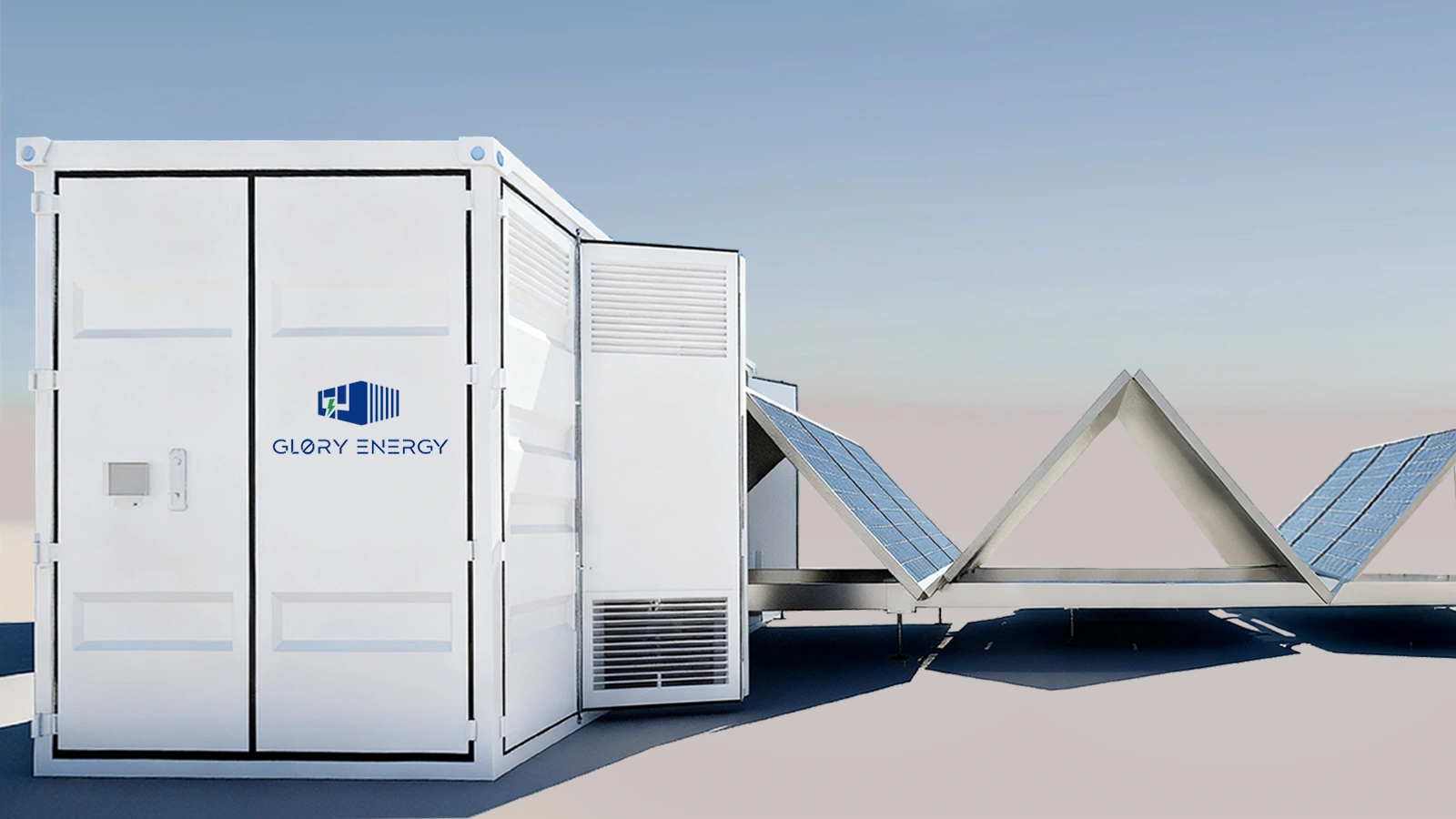
Most units come in 10, 20, or 40-foot steel enclosures. The 20-foot format typically holds 1,000 to 5,000 kWh, which covers most commercial and industrial (C&I) jobs and a good chunk of utility-adjacent projects. Forty-foot units scale up for utility-scale sites that need higher energy density per pad footprint without multiplying interconnection points.
Lithium iron phosphate (LFP) has become the default chemistry because it tolerates more charge cycles and runs cooler under stress than older nickel-based chemistries. The trade-off is slightly lower energy density, which matters only when land or pad space is genuinely scarce. When you review a vendor datasheet, check rated kWh and kW separately, operating temperature range, and IP rating for the enclosure. Those three numbers tell you more about real-world performance than any marketing sheet.
Key Components and Technical Configurations
Inside the box, a handful of subsystem choices determine how the unit performs over ten or twenty years, not just on day one.
- Battery architecture: Modular string or rack designs let you isolate a failed module without derating the whole container, which matters for uptime guarantees.
- Power conversion: Some containers run one large PCS; others split output across several smaller modular units. Modular PCS costs a bit more upfront but limits your exposure if a single inverter fails, and it simplifies AC or DC coupling choices for hybrid plants.
- Thermal management: Liquid cooling holds tighter temperature bands than air cooling and derates less at altitude or in extreme heat, though it adds mechanical complexity and a maintenance line item.
- BMS: This is the system’s nervous system. It monitors cell voltage and temperature, balances charge across strings, enforces safety interlocks, and streams telemetry back to your EMS or SCADA platform.
- Ancillary systems: Redundant HVAC, gas detection, and clean-agent suppression round out the safety stack, and ventilation design should follow NFPA 855 guidance for explosive gas mitigation.
Get the thermal and PCS decisions right early. Retrofitting either after commissioning is expensive and usually means downtime you didn’t budget for.
Primary Functions and Applications
A containerized BESS earns its keep across several distinct use cases, and most projects stack two or three of these to justify the CAPEX.
- Renewable smoothing and time-shifting. Solar and wind output swings by the minute; storage flattens that curve and shifts generation into hours when the grid or your load actually needs it.
- Grid services. Frequency regulation, voltage support, and increasingly grid-forming capability let a containerized unit act as a stabilizing asset rather than just a battery. The Department of Energy’s grid reliability analysis points to exactly this kind of resiliency service as a growing driver of BESS adoption.
- C&I peak shaving and demand-charge management. Many commercial customers pay demand charges based on their highest 15-minute draw each month. Shaving that peak with stored energy can cut a meaningful chunk off a monthly bill.
- Mobile and temporary power. Event organizers, disaster-response teams, and construction sites use towable or skid-integrated containers for temporary power without running a generator around the clock.
Black-start capability, once a niche spec, is showing up on more RFQs as utilities look for distributed assets that can re-energize a section of grid after an outage.
Benefits Compared With Traditional Site-Built Installations
Site-built installations require civil engineering, a purpose-built enclosure, and a construction timeline measured in months. Containerized systems compress that into weeks because the factory has already done the integration work.
- Speed. Less site civil work means a shorter path from contract signing to energized system.
- Scalability. Need more capacity next year? Add another container in parallel rather than redesigning a building.
- Transportability. A containerized unit can be relocated to a new site if project economics or land leases change.
- Standardization. Factory QA/QC on a repeatable design makes commissioning faster and gives insurers a known quantity to underwrite, compared with a bespoke enclosure they’ve never seen.
Pro Tip: Ask any containerized BESS vendor for their factory acceptance test (FAT) report before shipment, not after. Catching a wiring or calibration issue at the factory costs a phone call. Catching it on-site costs a week.
Design, Deployment, Safety, and Standards to Specify
Before you sign a contract, walk through site logistics and documentation with the same rigor you’d apply to a substation build.
- Site and logistics: Confirm crane and flatbed access, foundation load ratings, flood exposure, and altitude, since altitude affects both cooling performance and PCS derating curves.
- Electrical design: Plan your one-line diagram around the interconnection transformer, switchgear, AC bus configuration, and anti-islanding protection required by your utility.
- Cooling and redundancy: Specify HVAC redundancy so a single fan or compressor failure doesn’t force a shutdown during a heat wave.
- Fire protection and standards: Request UL 9540 and UL 9540A test reports, confirm NFPA 855 compliance, and verify cell or module-level certification under UL 1973 or IEC 62619. Some manufacturers now ship factory-integrated 20-foot containers with UL 9540 certification up to 3 MWh, which shortens the permitting conversation considerably.
- AHJ packet: Assemble certificates, CFD ventilation modeling, third-party test results, and manufacturer P.E. letters before you approach your fire marshal, not after.
Getting UL 9540A test data and an AHJ-ready packet in hand early is one of the highest-leverage moves in the entire project timeline. It routinely shaves weeks off permitting because the inspector isn’t waiting on documents you should have requested at contract signing.
Costs, Commercial Models, and Revenue Streams
Battery chemistry, PCS sizing, fire suppression systems, civil work, and transport logistics drive most of the CAPEX variance between projects. On the OPEX side, budget for scheduled maintenance, HVAC servicing, and a warranty or augmentation plan that covers capacity fade over the battery’s service life.
- CAPEX drivers: cell chemistry and count, PCS rating, enclosure fire package, pad and foundation work, freight and rigging.
- OPEX line items: preventive maintenance contracts, HVAC filter and refrigerant service, software/EMS licensing, and eventual cell augmentation.
- Revenue stacks: time-of-use arbitrage, demand-charge reduction, ancillary services (frequency regulation, capacity payments), and resilience value for critical facilities.
The global containerized BESS market was valued at roughly $13.87 billion in 2025 with a projected annual growth rate near 20.9% through 2030. That growth is compressing per-kWh costs across the industry, which makes stacking multiple revenue streams increasingly realistic for mid-sized projects that once relied on a single use case to justify the investment.
Sizing decisions between energy (kWh) and power (kW) shift ROI in opposite directions: a longer-duration system captures more arbitrage value, while a power-heavy configuration captures more from fast-response ancillary markets.
How Containerized Systems Integrate With Renewables and Grid Operations
DC-coupled architectures tie storage directly to a solar array’s DC bus before a shared inverter, cutting conversion losses but locking the battery’s charging profile to the array’s output. AC-coupled designs give each asset its own inverter, adding flexibility to charge from the grid or a separate renewable source at the cost of one extra conversion stage.

Control mode matters just as much as topology. Grid-following inverters need an existing voltage reference to sync to; grid-forming inverters can establish that reference themselves, which is what enables black-start and microgrid operation. Virtual power plant (VPP) aggregation, meanwhile, depends on reliable telemetry, so specify Modbus, IEC 61850, or your utility’s preferred SCADA protocol early, along with basic cybersecurity hardening on the telemetry link.
Guoqiang’s Containerized Product Lineup
Gq-international manufactures three containerized product families built for exactly the deployment scenarios covered above:
- Mobile PV-BESS Power Station for transportable renewable-plus-storage deployments.
- ODM/OEM Energy Storage Container for projects needing a customized capacity, footprint, or interconnection spec.
- E-House for integrated electrical houses on larger sites.
When you’re ready to scope an RFQ, come prepared with your load profile, desired runtime, and interconnection voltage, and request the manufacturer’s UL/NFPA documentation up front.
Lifecycle and Maintenance Requirements Specific to Containerized Energy Storage Units
A containerized BESS has a maintenance rhythm that’s more predictable than a site-built plant, precisely because the subsystems are standardized and enclosed. That predictability is the whole point of buying a container instead of custom-building.
Expect quarterly or semi-annual inspections covering torque checks on electrical connections, HVAC filter changes, coolant level and quality checks on liquid-cooled units, and firmware updates to the BMS and EMS. Battery capacity fade is the big lifecycle variable: most LFP systems retain a strong majority of rated capacity after several thousand cycles, but actual fade depends heavily on depth-of-discharge habits and ambient temperature exposure, so track it against your warranty curve rather than a generic industry number.
Seal integrity on the enclosure deserves more attention than most maintenance plans give it. A compromised gasket lets in humidity, and humidity inside a cabinet full of high-voltage connections is how minor issues become expensive ones. Fire suppression systems need their own inspection cadence, typically annual, independent of the battery maintenance schedule, since clean-agent systems have their own certification and recharge requirements.
Plan for augmentation, not just replacement. Because the container is modular, you can often add capacity or swap degraded strings without touching the rest of the system, which is a maintenance advantage site-built plants rarely offer. Budget a mid-life service event, somewhere around year seven to ten depending on chemistry and cycling intensity, where you reassess whether augmentation or a fuller refresh makes more economic sense.
Environmental Impact and Sustainability Considerations
The sustainability case for containerized storage starts with the steel box itself. ISO shipping containers and purpose-built steel enclosures are highly recyclable at end of life, and many manufacturers reuse or repurpose retired containers for secondary applications rather than scrapping them outright.
The battery cells are the harder environmental question. LFP chemistry has a real advantage here: it avoids cobalt and nickel, which carry the most contentious mining and supply-chain footprints among lithium-ion chemistries. That doesn’t eliminate the disposal question, though. End-of-life battery recycling infrastructure is still maturing in most regions, and recovery rates for lithium, iron, and phosphate vary by recycler and by how the cells were manufactured.
Project teams increasingly ask vendors for an end-of-life plan as part of the RFQ, not as an afterthought. That plan should specify who takes custody of degraded modules, whether the vendor has a take-back or recycling partnership, and what happens to the steel enclosure once the electronics are stripped out. Regulatory pressure on battery recycling is tightening in multiple markets, and a vendor without a clear answer here is a vendor who hasn’t thought past the warranty period.
Transportation emissions also factor in, and this is where containerized systems have a genuine edge. Because the unit ships pre-integrated rather than requiring separate shipments of enclosure materials, battery racks, and electronics to a job site for on-site assembly, the total freight and construction-related carbon footprint tends to run lower than a comparable site-built installation.
Containerized BESS vs. Skid-Mounted and Container-Less Systems
Skid-mounted systems trade the steel enclosure for an open or lightly covered frame, which cuts weight and cost but sacrifices the weatherproofing and fire-rated separation a container provides out of the box. They make sense for indoor installations or climate-controlled buildings where the enclosure’s job is already being done by the building itself.
Container-less, or “cabinet-based,” systems break the battery and power electronics into smaller individual enclosures distributed across a site rather than one integrated box. This approach can suit space-constrained rooftops or brownfield sites where a single large container won’t fit or where phased capacity additions matter more than a single big install.
Containerized BESS wins on a few specific axes: faster factory testing and commissioning, a known fire and safety envelope that AHJs have seen before, and easier transport and relocation since the whole system moves as one unit. It loses ground when a site has severe space constraints that make a monolithic box impractical, or when a project genuinely needs the battery and electronics physically separated for redundancy reasons that a single enclosure can’t satisfy.
The honest comparison isn’t “which is universally better” but which matches your site constraints and your AHJ’s familiarity with each format. For most C&I and utility-adjacent projects with a reasonably sized, accessible pad, a containerized unit remains the fastest path from contract to commissioning.
Emerging Trends and Innovations in Containerized Energy Storage Technology
Grid-forming inverter capability is moving from a specialty feature to a standard spec on new RFQs, driven by utilities that want distributed assets capable of black-start and microgrid support, not just simple charge-discharge cycling.
Liquid cooling is displacing air cooling faster than expected, even outside extreme-climate deployments, because it holds tighter temperature bands and extends battery life under aggressive cycling schedules. Vendors are also shrinking container footprints while raising energy density within the same steel envelope, largely through denser cell packaging and smarter rack layouts rather than a fundamentally new chemistry.
On the software side, EMS platforms are getting better at stacking multiple revenue streams automatically, shifting a single container between arbitrage, demand response, and frequency regulation within the same day based on real-time price signals rather than a fixed dispatch schedule. That kind of dynamic optimization is what’s pushing project economics past what a single-use-case system could ever deliver.
Standardization itself is an innovation worth watching. As UL 9540A testing becomes routine rather than exceptional, AHJs across more jurisdictions are developing faster, more predictable approval pathways for containerized systems specifically, which is quietly becoming one of the strongest arguments for choosing container-based storage over a custom build.
Case Studies Showcasing Successful Real-World Deployments
The clearest lesson from real deployments is that the projects with the smoothest commissioning are the ones that started their fire marshal and utility interconnection conversations before the container shipped, not after it arrived on-site. Projects that treat AHJ approval as a post-delivery task routinely lose weeks waiting on documentation that could have been requested during procurement.
A recurring pattern in C&I peak-shaving deployments: sites that stacked demand-charge management with a secondary revenue stream, typically frequency regulation participation, consistently outperformed the initial single-purpose financial model. The container’s software and telemetry infrastructure was already capable of the second function. The limiting factor was simply whether the project team configured the EMS to use it.
Mobile deployment case histories point to a different lesson: transportability only pays off when the interconnection and permitting requirements at the destination site were scoped before relocation, not discovered on arrival. A unit that’s electrically ready to move can still sit idle for weeks if the new site’s utility interconnection agreement wasn’t pre-negotiated.
The through-line across successful deployments is preparation, not luck. Teams that requested UL/NFPA documentation, load profiles, and interconnection specs before signing a contract consistently hit their energization dates. Teams that treated those as paperwork to sort out later consistently didn’t.
Why Containerized Wins More Often Than It Should
Custom-built enclosures still make sense for a handful of extreme-footprint or extreme-climate sites, but that’s a shrinking minority of projects. For nearly everyone else, the deployment speed and standardized safety documentation of a containerized unit outweigh whatever marginal density gain a bespoke build might offer.
Start the AHJ and insurer conversation the same week you start technical specification, not after you’ve picked a vendor. Use the product pages linked above to scope an RFQ while that conversation is still open.
— Hu
Get a Containerized Storage Quote Started
A leading manufacturer builds containerized battery systems engineered for demanding field conditions, produced at scale, and backed by in-house manufacturing rather than outsourced assembly. When comparing skid-mounted racks or custom enclosures against factory-integrated containers, manufacturing depth can be a practical difference. Some systems are built and quality-checked under one roof rather than assembled from components sourced from multiple suppliers on-site.

The ODM/OEM Energy Storge Container line is built for teams that need a spec tailored to a specific load profile or interconnection voltage. If your project is mobile or pairs storage directly with solar generation, the Mobile PV-BESS Power Station covers that use case directly, and the E-House suits larger integrated electrical installations. To start an RFQ, gather your load profile, target runtime, and site interconnection details, then reach out through the products page to request datasheets and certification documentation.
Sources
Consult NFPA 855 fire safety guidance for AHJ requirements and World Energy Outlook 2025 for market and renewable-integration context before finalizing CAPEX assumptions.
- Department of Energy releases report evaluating U.S. grid reliability and security
- Containerized BESS market size and growth — MarketsandMarkets
FAQ
What Is the Largest BESS in the United States?
The largest operating battery storage facilities in the U.S. are utility-scale sites in the hundreds of megawatts, typically built from arrays of many containerized or cabinet-based units rather than one single enclosure. Capacity leadership shifts frequently as new utility-scale projects come online, so treat any specific “largest” claim as a moving target rather than a fixed fact.
Why Are Some People Against BESS Projects?
Local opposition to battery storage projects usually centers on fire risk concerns, noise from HVAC systems, and visual or land-use impact near residential areas. Much of that concern eases once a project demonstrates UL 9540A testing, NFPA 855 compliance, and a clear AHJ-approved safety plan, since those documents directly address the fire-risk objection that drives most community pushback.
Is Hithium a Chinese Company?
Yes, Hithium is a Chinese battery cell and energy storage manufacturer, one of several major Chinese suppliers competing in the global containerized BESS supply chain alongside other manufacturers. Sourcing decisions for a project should weigh chemistry, certification status, and lead times rather than country of origin alone.
How Do BESS Projects Make Money?
Containerized storage generates revenue by stacking multiple services: time-of-use energy arbitrage, demand-charge reduction for commercial customers, and ancillary grid services like frequency regulation, which the Department of Energy identifies as a growing resiliency need. Many projects combine two or three of these streams rather than relying on a single revenue source, which materially improves the project’s payback timeline.