
To comply with NFPA 855 you must prepare a Hazard Mitigation Analysis (HMA), provide the required UL test reports or listings where applicable, classify the installation location correctly, and submit an Emergency Operations Plan (EOP) and Emergency Response Plan (ERP) to the Authority Having Jurisdiction (AHJ). Start the HMA and AHJ engagement now, because permitting delays almost always trace back to late or incomplete submissions.
TL;DR:
- Table 1.3 capacity thresholds determine whether the full standard applies, while the AHJ’s adopted edition and local amendments set requirements for each site.
- UL 9540 covers unit safety, while UL 9540A tests propagation in installed arrays; reviewers may seek gas data, ignition results, and site specific interpretation.
- A licensed professional engineer should prepare the HMA, matching modeled failure scenarios and mitigation assumptions to test reports and final construction drawings.
- Container ventilation and gas detection should activate at 25% of the lower flammable limit, with standby power and fire resistant exhaust fans.
- Keep HMA assumptions aligned with procured equipment, test reports, and final drawings; later substitutions can trigger resubmittals during AHJ review.
Table of Contents
- At-a-glance: the core NFPA 855 requirements projects must meet
- Hazard Mitigation Analysis (HMA): what to include and how to use it with the AHJ
- Testing and listings: UL 9540 vs UL 9540A and what AHJs look for in test reports
- Design and site controls: thresholds, separation, ventilation, explosion control, and suppression
- Compliance documentation, permitting and AHJ engagement (EOP, ERP, submittals)
- How containerized solutions and listed equipment fit NFPA 855
- Definition and scope of NFPA 855 compliance
- Key objectives and benefits of NFPA 855 compliance
- Detailed timeline and phases for achieving NFPA 855 compliance
- Integration of NFPA 855 compliance with renewable energy storage systems
- Common challenges and best practices during compliance implementation
- Expert perspective: common compliance bottlenecks and how to avoid them
- Publisher offering: containerized and mobile BESS solutions built for NFPA 855-ready projects
- FAQ
- Sources
- Selected primary sources and guidance for further reading
At-a-glance: the core NFPA 855 requirements projects must meet
Every stationary battery energy storage system (BESS) project needs to check its size against the threshold quantities in Table 1.3 in NFPA 855, which determines whether the full standard applies and what documentation the AHJ will expect. The 2026 edition consolidates general requirements in Chapter 4 and moves technology-specific rules, including those for lithium-ion systems, into their own chapters.
Location classification shapes nearly everything downstream: indoor, outdoor, walk-in enclosure, and containerized installations each carry different separation, ventilation, and suppression rules. Project teams should budget for these core requirements before design begins:
- A Hazard Mitigation Analysis addressing thermal runaway, detection, and suppression failure modes.
- Unit-level and, where required, installation-level test reports (UL 9540 and UL 9540A).
- Fire detection, gas detection, and ventilation systems sized to the enclosure and chemistry.
- Explosion control measures where deflagration risk applies.
- An EOP and ERP ready for first responders and facility staff.
Hazard Mitigation Analysis (HMA): what to include and how to use it with the AHJ
The HMA is the document that lets a project team propose performance-based alternatives instead of rigid prescriptive compliance, provided it demonstrates containment, safe evacuation, and deflagration mitigation to the AHJ’s satisfaction, according to the Sandia ESS Safety Codes Road Map. NFPA 855 Sections 4.4.1 through 4.4.5 require the HMA to evaluate single-failure modes, including thermal runaway and failure of detection, ventilation, or suppression systems.
A usable HMA generally works through these steps:
- Identify the battery chemistry, enclosure type, and worst-case failure scenario.
- Model thermal runaway propagation and expected gas generation.
- Map detection, ventilation, and suppression responses to each failure mode.
- Show containment and safe evacuation outcomes under the modeled scenario.
- Package the analysis with supporting test data for AHJ review.
Sandia’s road map notes that a well-built HMA is often the deciding factor in whether an AHJ grants a performance-based alternative, which can avoid costly prescriptive constraints when the justification holds up. A licensed professional engineer should prepare or stamp the HMA, and its assumptions need to match the testing and drawings submitted elsewhere in the package.
Pro Tip: Draft the HMA before finalizing enclosure separation distances. Changing assumptions after the AHJ has started review is the fastest way to add months to a permit timeline.
Testing and listings: UL 9540 vs UL 9540A and what AHJs look for in test reports
Unit-level listing under UL 9540 confirms that an individual battery system meets baseline safety construction requirements. Installation-level testing under UL 9540A goes further, evaluating how thermal runaway propagates once units are installed together, which is why many AHJs require it for larger or more densely packed systems.
UL’s own guidance describes UL 9540A as the consensus method for evaluating thermal runaway propagation, and notes that the updated installation-level test, Edition 6, focuses on vent-gas ignition scenarios and installation-level fire behavior rather than unit-level construction alone. That shift raises the bar for what AHJs expect to see in a submitted report.
Reviewers typically want to see:
- Gas composition data generated during the thermal runaway event.
- Propagation results showing whether the event spread to adjacent units.
- Ignition behavior of vented gases under installation conditions.
- An interpretation memo connecting lab results to the specific site layout.
UL 9540A Edition 6 and NFPA 855 Annex G.11 together raise the bar for installation-level testing, which directly influences sprinkler density calculations and the separation distances an AHJ will accept. Engineers working through test-level requirements can review our guidance on resolving UL 9540A test levels before submission.
Design and site controls: thresholds, separation, ventilation, explosion control, and suppression
Design decisions flow directly from the threshold and classification work done earlier. Teams sitting near a Table 1.3 threshold should coordinate with the AHJ early rather than assuming a borderline system will be waved through.
- Check installed capacity against Table 1.3 thresholds before finalizing array sizing, and flag any near-threshold system for early AHJ discussion.
- Apply separation and array grouping rules differently for indoor versus outdoor installations, as enclosure classification influences minimum clearances.
- Size ventilation to activate at a fraction of the lower flammable limit (LFL), with exhaust fans designed for extended fire resistance and backed by standby power.
- Favor explosion control per NFPA 69 where deflagration risk exists, with deflagration venting as a common mitigation; waivers are possible only when test data supports an equivalent level of protection.
- Favor water-based suppression systems when large-scale testing demonstrates their effectiveness for the chemistry and enclosure in question, and size sprinkler density to match the test-supported scenario.
Our thermal management guidance covers practical engineering measures, including cold plate design and temperature alarm thresholds, that support the ventilation and detection assumptions built into an HMA.
Compliance documentation, permitting and AHJ engagement (EOP, ERP, submittals)
A complete submittal package reduces the number of review cycles an AHJ needs. Most jurisdictions expect:
- Site plans and technical specifications for the full installation.
- The Hazard Mitigation Analysis with supporting calculations.
- UL 9540 and, where applicable, UL 9540A large-scale fire test reports.
- Explosion control design documentation, including venting calculations.
- Detection and suppression system drawings.
- The Emergency Operations Plan and Emergency Response Plan.
Kendall County’s “Notes to the Applicant” identify UL 9540A reports, the HMA, and explosion modeling as required submittal items, and note that local adoption schedules for NFPA editions affect how strictly an AHJ enforces newer requirements. Front-loading the EOP and ERP, rather than treating them as deferred submittals, tends to speed approval because fire officials often review emergency planning first. Common pitfalls include HMA assumptions that do not match the actual test report, specifying suppression equipment that was never tested for the installed chemistry, and submitting drawings without a PE stamp. Our permitting checklist for BESS project managers walks through the document sequence in more detail.
How containerized solutions and listed equipment fit NFPA 855
AHJs reviewing containerized or mobile battery systems look for the same attributes regardless of vendor: integrated ventilation sized to the enclosure, gas detection tied to exhaust activation, accommodation for explosion control hardware, sprinkler interfaces that match tested configurations, and accessible inspection points for first responders.
- Integrated ventilation and gas detection that align with 25% LFL activation assumptions used in the HMA.
- Explosion control provisions built into the enclosure rather than retrofitted.
- Sprinkler or suppression interfaces that match the chemistry’s tested configuration.
- Inspection access points that satisfy fire official walkthroughs.
Our Mobile PV-BESS Power Station and ODM/OEM Energy Storge Container product lines are built around these attributes, which helps project teams align factory specifications with HMA assumptions instead of reverse-engineering them after the fact.
Pro Tip: Request the manufacturer’s UL test interpretation and a PE-reviewed integration memo before finalizing your HMA. Matching factory data to site-specific assumptions early avoids rework during AHJ review.
Definition and scope of NFPA 855 compliance
NFPA 855, the Standard for the Installation of Stationary Energy Storage Systems, sets installation requirements for battery and other stationary energy storage technologies, covering everything from siting and separation to fire detection, suppression, and emergency planning. The 2026 edition organizes general requirements for all ESS technologies in Chapter 4, then places chemistry-specific rules, most notably for lithium-ion systems, in dedicated chapters that follow.
Compliance means satisfying whichever chapters apply to the installed technology, plus the general requirements that apply regardless of chemistry. Scope is triggered by capacity: a system below the threshold quantities in Table 1.3 may fall outside full NFPA 855 applicability, while anything at or above those thresholds needs the complete compliance package, from HMA through EOP and ERP.
Scope also extends to where the system sits. Indoor dedicated-use buildings, outdoor installations, walk-in enclosures, and non-dedicated-use buildings each trigger different subsets of requirements within the standard. A system installed in a parking structure, for instance, faces different separation and ventilation rules than the same equipment installed in a purpose-built enclosure on an open site.
Because NFPA 855 is model code, actual enforcement depends on which edition a given jurisdiction has adopted and whether local amendments modify any provision. Project teams should never assume the current NFPA edition is automatically in force everywhere; the applicable AHJ’s adopted edition and local code amendments control compliance for that specific site.
Key objectives and benefits of NFPA 855 compliance
The standard exists to prevent two outcomes: an uncontrolled thermal event escalating into a fire or explosion, and first responders or occupants being put at risk when that happens anyway. Every requirement in NFPA 855, from detection thresholds to separation distances, traces back to one of those two objectives.
For project teams, compliance delivers benefits beyond meeting a legal obligation. A well-documented HMA and complete test reporting give the AHJ confidence to approve a project on the first or second review cycle rather than sending it back repeatedly for missing information. That matters because permitting delays are typically the single largest schedule risk on a BESS project, larger than equipment lead times in many cases.
Compliance also protects the asset itself. Systems designed around tested ventilation, detection, and suppression assumptions are less likely to suffer a cascading failure that takes out an entire array rather than a single unit. Insurance underwriters increasingly look for NFPA 855 compliance documentation as part of their own risk assessment, since it demonstrates that fire and explosion scenarios were modeled and mitigated rather than assumed away.
Finally, compliance creates a paper trail that protects the project team itself. A signed-off HMA, PE-stamped drawings, and an AHJ-approved EOP and ERP form the record that shows due diligence was exercised, which matters if an incident ever triggers a post-event investigation or insurance claim.
Detailed timeline and phases for achieving NFPA 855 compliance
Compliance work follows a rough sequence, though phases overlap in practice rather than running strictly end to end.
Early design, typically the first phase, is where a project team checks capacity against Table 1.3 thresholds, selects enclosure type and chemistry, and identifies which NFPA 855 chapters apply. This is also the point to start informal conversations with the AHJ, since local amendments or edition adoption can shape design choices before they get locked in.
HMA development runs alongside detailed design. The HMA cannot be finalized until enclosure separation, ventilation sizing, and suppression strategy are settled, but those design choices should be informed by preliminary HMA modeling. Teams that treat these as sequential rather than iterative tend to lose the most time.
Testing and listing acquisition, whether obtaining UL 9540 unit listings or commissioning UL 9540A large-scale fire tests, often sits on the critical path because lab scheduling and report turnaround can take longer than the design work itself. Procuring pre-tested, listed equipment shortens this phase considerably compared to custom-built systems requiring fresh testing.
Submittal and AHJ review follows, covering plans, the HMA, test reports, explosion control documentation, and the EOP and ERP. Front-loading emergency planning documents, as noted earlier, tends to shorten this phase. Final inspection and commissioning close out the process, confirming installed conditions match the approved submittal package before the system goes live.
Integration of NFPA 855 compliance with renewable energy storage systems
Battery storage paired with solar or wind generation faces the same NFPA 855 requirements as standalone storage, but integration adds a few project-specific wrinkles. Co-located systems often sit on sites with existing electrical infrastructure, which can constrain where separation distances and enclosure placement end up relative to inverters, transformers, and interconnection equipment.
Renewable project timelines also tend to be tighter than standalone storage projects since storage is frequently added to capture incentive programs or meet interconnection deadlines tied to the generation asset. That makes early AHJ engagement even more valuable: a storage system bolted onto a solar project at the last stage of permitting has far less flexibility to adjust separation or enclosure classification than one designed in from the start.
Containerized and mobile storage formats fit well into renewable integration because they arrive with ventilation, detection, and explosion control provisions already engineered into the enclosure, which simplifies the HMA’s job of mapping failure modes to mitigation systems. For project teams managing both a generation interconnection timeline and a storage permit in parallel, a pre-engineered enclosure reduces the number of open variables the AHJ has to evaluate.
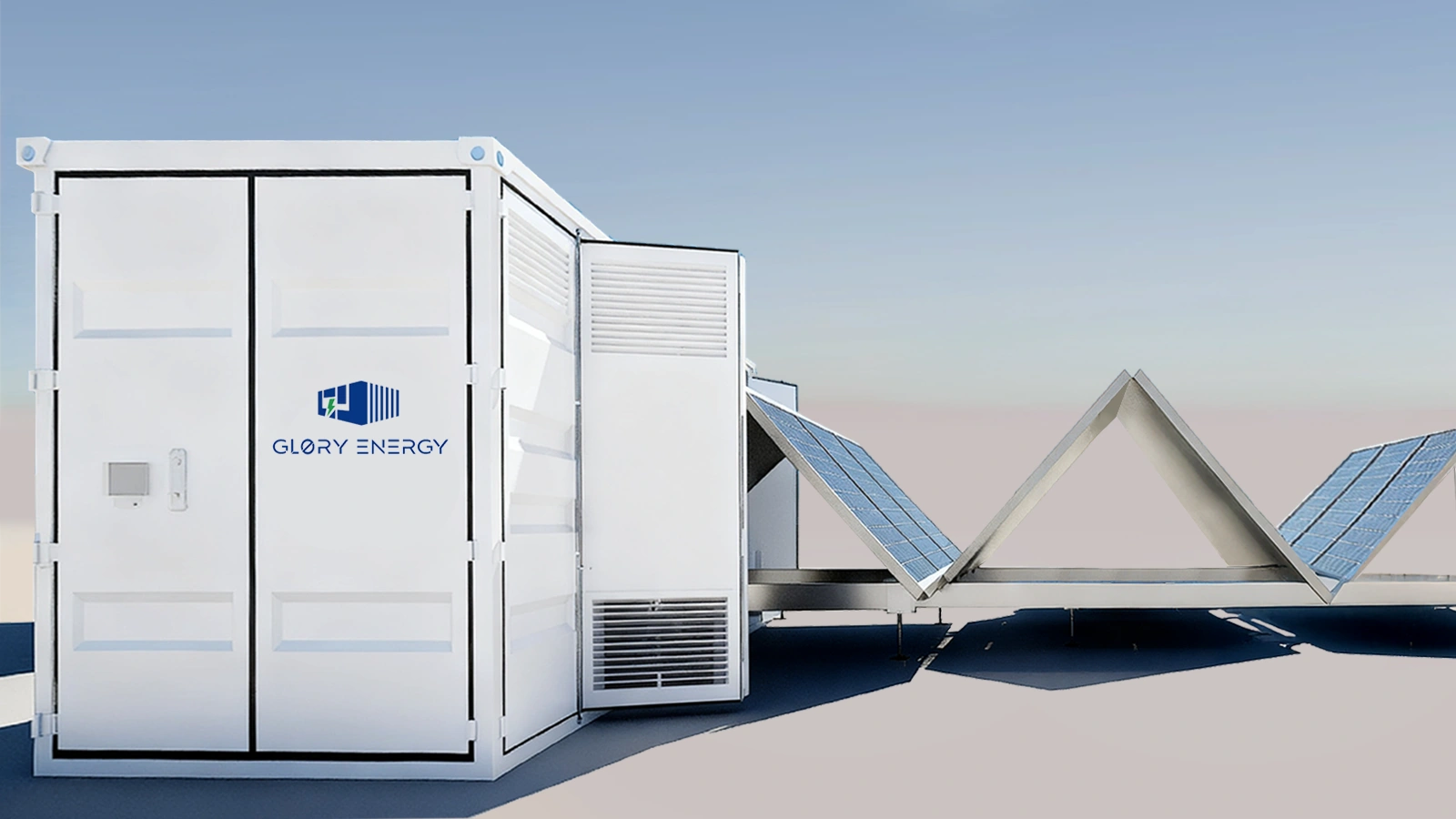
Solar-plus-storage projects should also confirm that the PV mounting structure and storage enclosure placement do not create unintended separation conflicts, since many jurisdictions treat the combined footprint as a single site review rather than two independent permits.
Common challenges and best practices during compliance implementation
The most common challenge is mismatched assumptions between the HMA, the test reports, and the final construction documents. A PE builds the HMA around one enclosure configuration, procurement later substitutes a different suppression system, and nobody updates the HMA to match. AHJs catch this quickly, and it triggers a resubmittal cycle that can cost weeks.
A second recurring issue is treating AHJ engagement as a late-stage formality rather than an early design input. Teams that wait until the full package is ready before talking to the fire marshal often discover a local amendment or interpretation that changes separation requirements, forcing a redesign after drawings are already finalized.
Best practices that consistently reduce friction include:
- Engaging a licensed PE for the HMA from the start, rather than treating it as a document to backfill after design is locked.
- Aligning HMA assumptions with actual procured equipment, not a generic or placeholder specification.
- Pre-checking sprinkler water supply and suppression system availability against what the large-scale test report actually supports.
- Treating local guidance documents, such as county “Notes to the Applicant,” as binding for that jurisdiction even when they reference a different NFPA edition than the current one.
Partner services also matter after an incident or during commissioning. Industrial cleaning specialists who handle fire and smoke restoration on industrial equipment can be a useful resource to have identified in advance, since post-incident cleanup and equipment recovery planning is easier to arrange before an event than during one.
Expert perspective: common compliance bottlenecks and how to avoid them
AHJ alignment and early HMA planning are the two biggest schedule risks on any BESS project, more disruptive than equipment lead times. Engage a PE early, keep HMA and test assumptions in sync, and confirm sprinkler water supply before submittal. Local guideline variances are real: treat the AHJ’s own documents as the binding word.
— Hu
Publisher offering: containerized and mobile BESS solutions built for NFPA 855-ready projects
We build our containerized and mobile energy storage systems around the same attributes AHJs look for during review: integrated ventilation, gas detection tied to exhaust activation, explosion control accommodation, and sprinkler interfaces matched to tested configurations. That means the enclosure specification work that normally eats weeks of your HMA development is already handled at the factory level.

Our Mobile PV-BESS Power Station suits projects needing deployable, relocatable storage without a fixed enclosure build, while our ODM/OEM Energy Storge Container fits larger fixed installations requiring custom configuration. Both are available through our full product range, alongside OEM and ODM mounting solutions and project-specific engineering support for teams integrating storage with solar.
| What you need | Where it fits |
|---|---|
| Deployable storage with integrated safety systems | Mobile PV-BESS Power Station |
| Custom-configured fixed container for larger sites | ODM/OEM Energy Storge Container |
| Mounting and engineering support for solar-plus-storage | OEM and ODM Mounting Solutions |
Reach out through our product pages to request permit-ready documentation or a project-specific RFQ, and have your HMA support data in hand so we can match the enclosure specification to your site conditions from the start.
FAQ
What does NFPA 855 compliance actually require?
NFPA 855 compliance requires a Hazard Mitigation Analysis, required UL test reports or listings, correct location classification, and an Emergency Operations Plan and Emergency Response Plan submitted to the AHJ. The exact mix of detection, ventilation, and suppression requirements depends on the chemistry, enclosure type, and capacity against Table 1.3 thresholds.
Is NFPA 850 a standard?
A separate recommended practice covers fire protection for electric generating plants and high-voltage direct current converter stations, distinct from NFPA 855, which governs stationary energy storage system installations. Project teams working on generation facilities with co-located storage may need to reference both documents for their respective scopes.
What are the risks of thermal runaway in a BESS?
Thermal runaway can propagate from a single failed cell to adjacent units, generate flammable and toxic gases, and potentially escalate into fire or explosion if detection, ventilation, and suppression systems do not respond as modeled. This is why UL 9540A installation-level testing and a thorough HMA are central to NFPA 855 compliance.
What is an energy storage system?
A stationary energy storage system (ESS) stores electrical energy, typically in batteries, for later discharge to support grid stability, backup power, or renewable energy integration. NFPA 855 governs the installation requirements for these systems once they meet the capacity thresholds that trigger the standard’s applicability.
What is the IEC 62133 standard?
An international standard covers safety requirements for portable sealed secondary cells and batteries containing alkaline or non-acid electrolytes, addressing cell and battery-level construction and testing. It operates alongside, rather than in place of, installation-level standards like NFPA 855, which govern how a system is sited and installed once built.
Sources
- NFPA 855 Standard development and SDR
- The ESS Safety Codes Road Map (Sandia)
- Fire protection guidelines for BESS facilities (San Diego County)
- Kendall County ESS Guide – Notes to Applicant
- Understanding UL 9540A and NFPA 855 (UL The Code Authority)
Selected primary sources and guidance for further reading
- The ESS Safety Codes Road Map (Sandia)
- Fire protection guidelines for BESS facilities (San Diego County)
- Kendall County ESS Guide – Notes to Applicant
- NFPA 855 Standard development and SDR
- Understanding UL 9540A and NFPA 855 (UL The Code Authority)
- San Diego County BESS guidelines