
A guardrail tender package bundles the solicitation, technical specifications, standard plan sheets, special provisions, bill of quantities, attached PDFs, and key dates. For new installations and full replacements in the U.S., confirm MASH 2016 compliance before you price anything. Your next step is locating the required shop drawings and certificates of compliance, because missing paperwork sinks more bids than price does.
TL;DR:
- For new permanent installations and full replacements in the U.S., verify MASH 2016 compliance and the tender’s specified test level, such as TL-2 or TL-3.
- Proprietary terminals require manufacturer installation instructions, parts lists, and certificates of compliance, while tenders that name a brand may prohibit substitutions, so confirm availability before bidding.
- Rail is commonly measured between splice centers and terminals counted individually; price to the schedule’s increment, which may be 12.5 feet.
- When incidental work has no separate pay item, include its cost in the unit price and track addenda that may change quantities or terminals.
- Plan for inspection records and installation requirements covering embedment, bridge anchors, and manufacturer checklists, since missed details can lead to rework.
Table of Contents
- What a guardrail tender package contains
- Standards and technical requirements to check
- Bid-preparation checklist for a responsive submission
- How guardrail is measured and paid
- Installation and inspection clauses that drive change orders
- Materials specifications and quality requirements
- Environmental and weather resistance standards
- Compatibility with highway types and traffic conditions
- Maintenance and durability expectations in the tender
- Warranty and post-installation service conditions
- An editorial view on triaging guardrail bids
- How we supply compliant guardrail systems for your tender
- FAQ
- Sources
What a guardrail tender package contains
Before you estimate, you need to know where every requirement lives. A typical package includes:
- The invitation or notice to bidders, with the bid form and unit-price schedule
- Technical specifications and project special provisions
- Standard plan sheets and installation drawings
- The bill of quantities with pay items
- Attached plans and PDFs, plus Q&A and addenda
- A schedule of key dates: pre-bid meeting, site visit, and bid opening
When documents disagree, agency contract documents win. Project special provisions and standard plans normally control installation details over generic manufacturer literature, and crews often keep signed standard drawings on site to settle inspector questions. Sample contract documents show how this works in practice: a Kentucky guardrail proposal lists pay items, quantities, and scope such as site preparation, remove-and-replace work, and end treatments, and requires materials to be sampled and tested under the department’s manuals.
Before estimating, download and archive the spec drawings, special provisions, addenda, and manufacturer shop drawings. Addenda can change a quantity or a terminal type after you have already priced the job, so track each one against your bid.
Standards and technical requirements to check
Start with the crash-test standard. Under Ohio DOT’s MASH guidance, new permanent installations and full replacements must meet MASH 2016 criteria, which replaced NCHRP 350 for new work. Check which test level the tender calls for, such as TL-2 or TL-3, and read any agency implementation notes. Our explainer on MASH versus NCHRP 350 walks through what that difference means for a tender.
Then verify the geometry. Tenders for the Midwest Guardrail System commonly specify:
- A top-of-rail mounting height of about 31 inches, with a stated tolerance, per Caltrans guidance
- Post spacing of about 6 feet 3 inches for standard sections
- 12-inch blockouts in common MGS details
- Crashworthy end terminals, transitions, and anchorages, with manufacturer installation instructions
CDOT’s field guide for construction engineers and inspectors calls for MGS Type 3 W-Beam at a 31-inch mounting height and requires manufacturer installation instructions and certificates of compliance for proprietary end anchorages.
That means a proprietary terminal is acceptable only when you can supply the manufacturer’s documentation and parts list.
Also watch for special configurations: long-span or omitted-post details, stiffened sections, and bridge or curb mounting. The Missouri DOT policy guide recommends MASH 2016 crashworthy terminals for exposed ends of all new runs, and design memos such as South Carolina’s give design lateral deflection values where the project needs them.
Pro Tip: Build a one-page matrix of every dimension, test level, and terminal type in the tender, and tick each one against your proposed hardware before you start pricing.
Bid-preparation checklist for a responsive submission
Work through these in order:
- Complete and sign the bid form and unit-price schedule.
- Attach shop drawings that match the project’s standard plans.
- Include manufacturer installation instructions and parts lists for each proprietary terminal.
- Provide certificates of compliance for the devices you propose.
- Submit proof of licensing, insurance, and bonding where required.
- State delivery terms and FOB details.
- Confirm every addendum is acknowledged.
Administrative items trip up capable bidders. A county notice to bidders and bid book shows the usual list: bonding, license class, DBE goals, submission format, and pre-bid meeting schedules. Some tenders also lock you into a specific brand with no substitutions and award to the lowest responsive, responsible bidder, as in this example IFB.
The common traps are proposing non-MASH hardware for new installs, leaving out manufacturer installation checklists for proprietary terminals, and pricing in units that do not match the bid schedule. For a closer look at installer-side mistakes, read our piece on three spec mistakes that create liability.
Pro Tip: Score your own bid against the tender the way an evaluator would, line by line, before you submit.
How guardrail is measured and paid
Measurement rules decide whether your price matches the schedule. Guardrail is often measured center-of-splice to center-of-splice in linear feet, while terminals and end treatments are counted each. Quantities may come in set increments: South Carolina’s design memo notes 12.5-foot units, which equals 12 feet 6 inches.
Keep these points in mind when you build the estimate:
- Terminals contribute to length of need, so check how the tender counts them before you calculate required rail length.
- Round to the bid schedule’s increment, not to the length you would prefer.
- Look for incidental pay items bundled into the scope, such as remove and re-erect existing rail, mobilization, ground preparation, embankment, and temporary traffic control.
If an incidental item is not listed as its own line, assume its cost belongs inside your unit price. Reading the sample Kentucky proposal next to your own schedule is a quick way to spot where those costs hide.
Installation and inspection clauses that drive change orders
Field clauses cause most failed inspections. Read these closely:
- Embedment and earth pads: Many tenders set a minimum post embedment and call for embankment widening where needed. Tennessee’s circular letters set embedment and post-length rules for new guardrail and terminal installations.
- Bridge decks and rock: Expect special anchor bolts or epoxy anchors, drill-in-rock procedures, and documentation requirements for nonstandard conditions.
- Inspection deliverables: Daily installation checklists, signed certificates of compliance for installed devices, and manufacturer checklists submitted to the engineer before installation. Caltrans construction guidance covers post spacing, block width, flare limits, and inspection steps, and expects contractors to follow manufacturer manuals where proprietary terminals are specified.
Price the inspection paperwork as real labor. A structured record system helps, and this guide to inspection documentation best practices covers how to keep first-article and QA records organized.
Pro Tip: Photograph post embedment and terminal assembly at each stage, and file the images with the daily checklist the same day.
Materials specifications and quality requirements
Tender material clauses usually reference an agency’s approved specifications for steel beam rail, posts, blockouts, hardware, and terminals. Expect the contract to require that materials be sampled and tested under the department’s sampling manuals, which the Kentucky sample proposal illustrates. Recurring supplemental specifications and special provisions also standardize pay items and unit descriptions across many states, as the Illinois specifications and proposal shows.
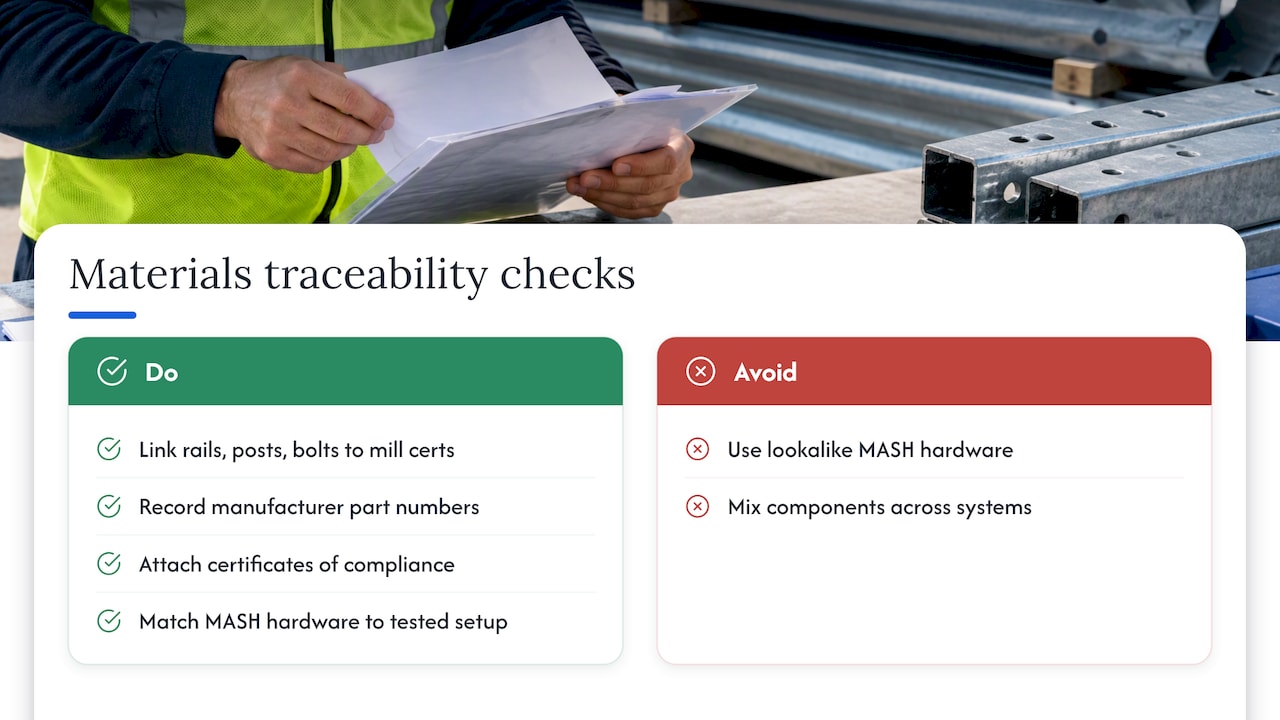
What evaluators look for is traceability. Every rail section, post, and bolt should connect to a mill certificate, a manufacturer part number, and a certificate of compliance. If the tender names MASH-tested devices, the hardware you propose must match the tested configuration, not a lookalike. Mixing components from different systems is a classic reason for rejection.
For galvanized steel, tenders often specify coating requirements and finish details. We publish material and finish information for galvanized steel guardrail systems, which you can attach to a submission. When a tender asks you to document quality steps, state who inspects, at what stage, and what records you keep. A bid that describes its QA process in a sentence or two reads as more responsive than one that only promises compliance.
Environmental and weather resistance standards
Corrosion protection is where tender language gets specific. Roadside steel faces road salt, coastal air, moisture, and temperature swings, so specifications typically require galvanizing and sometimes additional finishes. Read the finish clause for the coating type, the applicable material standard, and any repair rules for field-cut or damaged galvanizing.
Where a tender asks for enhanced protection, such as a duplex system of galvanizing plus a topcoat, request the finishing details early. Technical guidance on powder coating galvanized steel explains how duplex checklists work and what surface preparation matters, which helps you judge whether a proposed finish meets a tender’s wording.
Practical steps for bidders:
- Match the finish to the exposure described in the tender: coastal, snow-belt, or arid.
- Confirm that hardware, not just rail, carries the specified coating.
- Document touch-up procedures for cut ends and drilled holes.
- Keep coating certificates with the rest of your compliance package.
Weather also affects installation. Frozen ground can change post embedment methods, and wet conditions can delay concrete or epoxy anchoring at bridge decks. If the tender sets a completion window, price winter or monsoon risk in the schedule, not as an afterthought.
Compatibility with highway types and traffic conditions
A tender ties hardware to the road it protects. Roadway class, design speed, traffic mix, and site geometry drive the required test level and the system type. Higher-speed highways and roads with heavier vehicles generally call for higher test levels, while lower-speed facilities may allow TL-2 hardware. Always take the test level from the tender, not from habit.
Check these site conditions against your proposal:
- Slopes and offsets: Flare rates, slope limits, and distance from the travel lane affect which terminal works.
- Bridges and curbs: Bridge rail connections and curb-mounted details need transitions that match the tested system.
- Medians and roadsides: Barrier placement and deflection space determine whether a flexible or stiffer section fits.
- Length of need: The runway of protection must cover the hazard, with terminals counted according to the contract’s rules.
Deflection matters in tight spaces. Design memos such as South Carolina’s list design lateral deflection values for tested devices, and the Montana MASH guidance memo covers default MGS items and permitted terminal options. For product overviews by highway application, see our highway guardrail systems page.
Maintenance and durability expectations in the tender
Many tenders say little about maintenance explicitly, yet durability expectations hide in the details. Coating requirements, hardware specifications, and installation tolerances all determine how a system ages. A tender that sets a strict galvanizing requirement is telling you the owner expects the barrier to last without early repainting or replacement.
Maintenance replacement and adjustment work often follows different rules than new construction. Tennessee’s circular letters, for example, separate new guardrail and terminal installations from maintenance replacement and adjustment installations, which fall under a different letter. Make sure you are bidding under the correct rule set.
Ask these questions while reading the documents:
- Does the contract require repair of damaged galvanizing on site?
- Are replacement parts expected to match the original system?
- Does the owner specify spare parts or parts lists for proprietary terminals?
- Who handles removal and re-erection of existing rail when it is part of the scope?
Keep a parts list and a clear identification scheme for every component you deliver. Owners who later repair a terminal after an impact need to find the right part fast, and a bidder who provides that information up front tends to score well on responsiveness.
Warranty and post-installation service conditions
Warranty language varies widely, and many guardrail tenders say little about it. Read the general conditions and special provisions for any stated warranty period, correction-of-defects clause, or retention terms. When the contract is silent, do not invent a warranty promise in your bid; state clearly what your documentation covers, such as material certificates and manufacturer installation instructions.
Post-installation obligations usually take the form of paperwork and corrections. Expect to hand over as-built drawings, signed certificates of compliance for installed devices, and manufacturer checklists. If an inspector finds an installation that deviates from the standard plans, you may be required to correct it at your cost, which is why the daily checklists matter.
Two practical habits help:
- Align your supplier’s documentation with the contract’s submittal list before award, so nothing is missing at closeout.
- Confirm lead times and delivery terms in writing, since a delayed terminal can hold up an otherwise finished run.
Where a tender requires a named brand with no substitutions, your service conditions depend on that manufacturer’s support, so confirm availability before you bid. If a warranty or service clause is unclear, submit a written question before the question deadline rather than assuming.
An editorial view on triaging guardrail bids
When scoring bids, check three things in order. First, confirm the stated MASH level and that the tender actually permits the terminal the bidder named, with manufacturer documents attached. Second, make sure shop drawings and certificates are present and that their units match the pay items in the bid schedule. Third, only then compare price. A cheap bid that fails the first two checks is not cheap, it is a change order waiting to happen. Supplier-provided spec packages can speed technical validation considerably.
— Hu
How we supply compliant guardrail systems for your tender
We supply factory-fabricated steel guardrail systems suited for tender submissions. Fewer gaps in your paperwork means a more responsive bid and fewer surprises at inspection.
Start with these pages: our guardrail systems page for construction details and shop drawings, our steel galvanized guardrails page for materials and finishes, our highway guardrails overview, and our installation guidance. Before you submit, request a compliance package and shop drawings, get lead times and delivery terms in writing, and confirm the QA and inspection documentation your tender requires. Contact us through Gq-international and tell us the tender requirements so we can match the package to your bid.
FAQ
What are guardrail tender specifications?
They are the technical and contractual requirements in a tender package that define the hardware, dimensions, materials, installation, and documents a bidder must supply. They usually include specifications, standard plans, special provisions, and a bill of quantities.
Do new guardrail installations need MASH compliance?
Yes, for new permanent installations and full replacements in the U.S., agencies require MASH 2016 criteria, according to Ohio DOT. Bidding older, non-MASH hardware on new work is generally grounds for disqualification. Always confirm the exact level in your tender.
Which documents should a guardrail bid include?
Include the signed bid form, unit-price schedule, shop drawings, manufacturer installation instructions, and certificates of compliance. Add proof of licensing, insurance, and bonding where required, plus delivery terms. Check the notice to bidders for any extra administrative items.
How is guardrail measured in a tender?
Rail is commonly measured in linear feet between splice centers, while terminals are counted each. Some contracts use set increments, so match your pricing to the bid schedule.
Sources
- Transportation
- Guardrail Systems Field Guide For Construction Engineers and Inspectors
- Chapter 4 Construction Details